


Martine, who runs Melkerhei together with Pieter and a strong team of employees, tells how a food truck grew into a full self scan shop and why she would take that step again without hesitation.
Deliberately small, deliberately different
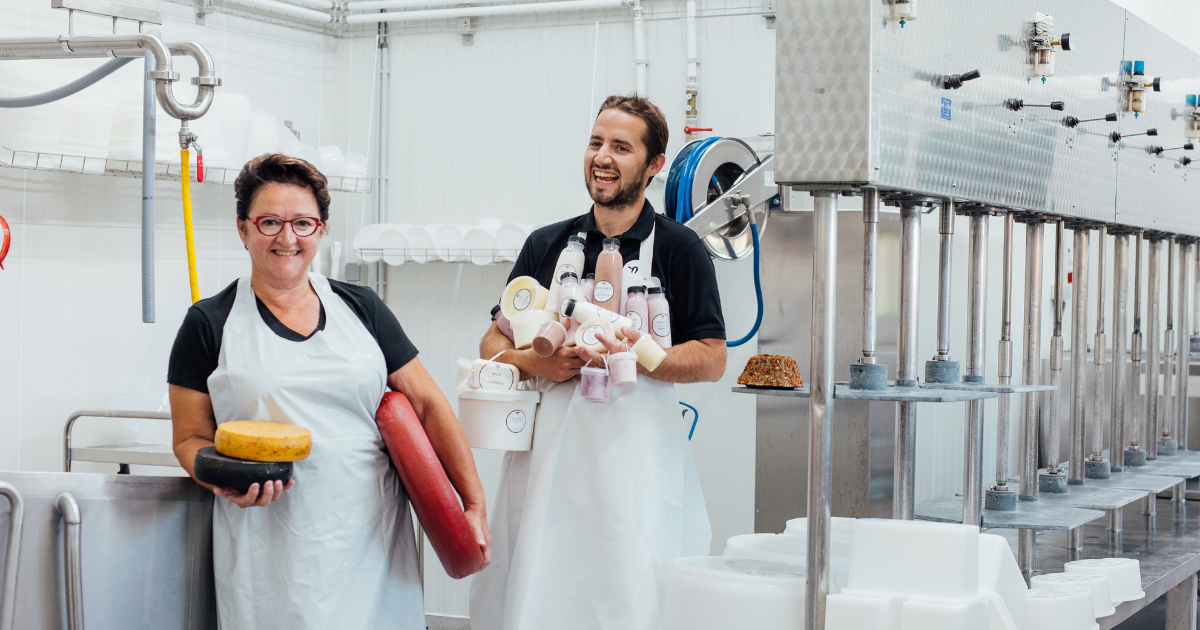
Melkerhei is first and foremost a dairy farm. "We have 75 cows, which isn't a lot," says Martine. "To keep the business viable we either had to expand, most dairy farms have hundreds to a thousand cows, or diversify. We chose to diversify: making our own dairy." Butter, yoghurt, quark, hard and young cheeses: everything is made on the farm, a few metres from the milking installation. "With 75 cows, our cows can still graze outside. With thousands that is no longer possible, and we didn't want that at all. We want to be autonomous."
For years Martine sold that dairy from a food truck at the farm, on Fridays and Saturdays. Until the customers themselves announced the next step. "You heard it again and again: can't you stay open longer? Don't you sell flour, vegetables, fruit, meat too? That's how the ball started rolling. It's important to listen to your customers."
The food truck was bursting at the seams
Longer opening hours were simply not feasible in the food truck. "You have to bring everything out every day and put it away again at the end of the day. In terms of working time that was far too intensive," says Martine. "And our range was too limited. We couldn't show nearly everything we can now sell in the shop."
Two options were on the table: build a classic farm shop and use staff to keep it open every day, or think along with today's customer, who wants to shop whenever it suits them. It became the second. "A self scan shop was actually the obvious choice: customers can come to us from early morning to late evening." The shop was set up in the farmhouse of Martine's mother, whom the grandchildren called mémé. That's how Chez Meme got its name right away, in the place where the cows used to be milked.
The choice for one partner
For the POS system the family went to look at Hoeve van Elven, where the Tilroy self checkout was already running. A visit Martine describes as the moment a whole world opened up. The choice was quickly made. "We deliberately chose Tilroy completely, as a total solution. One partner is the easiest: then you are better supported if anything happens."
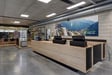
Operation is deliberately kept simple. Customers do their shopping, put everything on the counter at the self checkout and scan their products with the handheld scanner or the fixed scanner under the device. Payment is electronic, by card or phone. "No coins, no cash."
At the opening, at the end of 2024, someone was on standby for three months, just to be safe, to help customers on their way. "None of that turned out to be necessary. Customers are cleverer than we think," Martine laughs. She also dismisses the cliché about older customers: "I love it when I see in the shop that someone older explains to someone younger how it works. Let people be proud of what they can do, you shouldn't patronise them."
Trust works both ways
A shop without supervision, does everyone pay properly? Martine is clear about it. "If you give people the trust to do their thing, you get an enormous amount back. Customers often tell us how nice it is to shop here. There are even people who call back someone ahead of them because they forgot to pay."
There are cameras, and the village community provides social control. But control mostly turns out to be confirmation. "We have jugs of olive oil of 55 and 90 euros. If a few of those are suddenly gone, we zoom in on the camera footage and see: perfectly handled."
The best proof came at Easter, shortly after the opening. Martine set up with the food truck next to the shop to put together custom cheese platters, like before. "People just walked past me. At first I didn't know what was happening, but actually that was the confirmation: customers like to shop anonymously, at their own pace. We had taken the right path."
Thousands of products, one system
Chez Meme is now much more than a dairy shop. "You can come in here and put together your dinner: potatoes, meat, fish, vegetables, fruit, flour. Everything except toilet paper, really," says Martine. The potato farmer is less than five kilometres away, the meat farmers five to six, and through the cooperative Kortom Leuven the shop is restocked twice a week by farmers from the wider region.
All those products, thousands by now, are in Tilroy. Every producer delivers with a barcode; customers only select loose vegetables and fruit on the screen. "The first year, entering them was quite a job. Now it's a piece of cake." And the system gives back more than a receipt: "We can pull a lot of statistics. There is much more in Tilroy than what we use today. It's cleverly put together."
A breath of fresh air
The biggest difference? For Martine it is freedom. "Tilroy was really crucial to take the step to the farm shop. We didn't want to stand at the checkout ourselves, and it had to be easy for the customer." Where she used to be stuck in the food truck, busy or not, she now restocks the shelves whenever it suits her, together with a small team of flexi workers on busy Fridays and Saturdays.
"I regularly say it to my husband and my son: what a breath of fresh air, that shop. Sometimes I'm busy there until nine in the evening, but then because I want to. If one of the grandchildren comes by, I can spend time with them. That is a completely different way of working."
She doesn't think about a classic checkout for a second anymore. "With Tilroy's self checkout, I wouldn't dream of putting a checkout with a cashier here. The customers would be shocked." And the figures follow: sales of their own dairy have increased since the shop opened, for Martine purely a matter of accessibility. Customers now come from more than fifty kilometres away, among other things for the raw milk.
To fellow farmers who are hesitating about a self scan shop she has a short answer, one she has given literally several times: "Would I choose Tilroy again? Without a doubt."
Ready for the next chapter
Melkerhei always looks five years ahead. Today the family processes most of its own milk itself; the ambition is to go to one hundred percent within a few years, with a new processing room and extra machines. That way the family sets the price of every litre of milk itself. The short chain, down to the last drop. And while the cheeses ripen and the cows graze outside, Chez Meme just keeps running. From 7 am to 9 pm. Without a cashier.