




Vintage as the standard
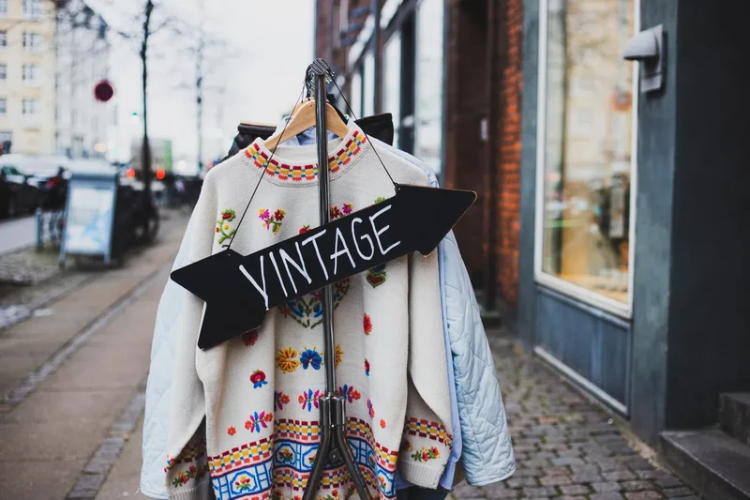
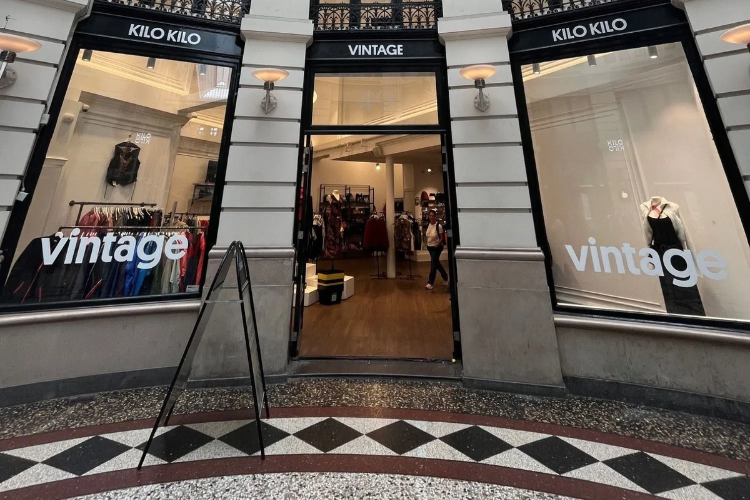
Vintage clothing is increasingly shedding its dusty image. A growing group of people chooses this generally more affordable and more sustainable alternative to new clothing. And that is exactly Kilo Kilo's mission: "We want vintage to become the standard and try to make it accessible to as wide an audience as possible," says national retail manager Rijk Versluijs. "We do that with an inspiring shopping experience and by opening on triple-A locations, next to the fast-fashion brands. That way we also hope to reach people who would otherwise not easily walk into this type of store."
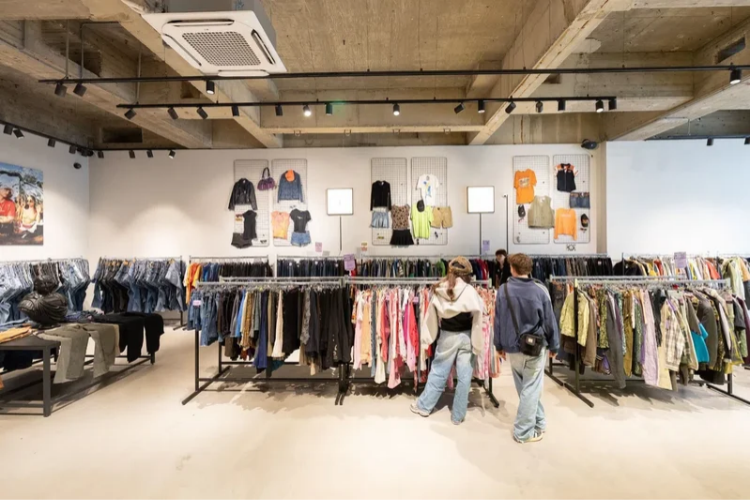
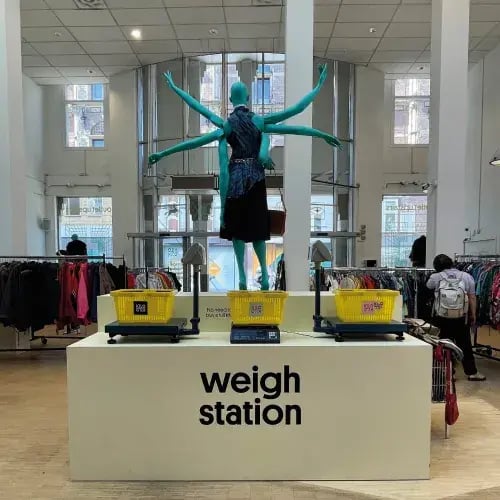
From the grandmother who finds the blouse she once wore herself to her granddaughter looking for a gem to underline her own identity; everyone is welcome at Kilo Kilo. "Customers find a wide range of both American and European vintage and different styles and influences from different periods at a competitive price," Versluijs continues. True to the concept, the clothing sells for 35 euros per kilo. "We now also offer a curated clothing department; a special selection of pieces that we buy separately and for which customers pay a fixed price."
Scaling up to 11
That Kilo Kilo only has physical stores is in a sense a logical choice. Especially for the passionate treasure hunter, nothing beats browsing through the racks by hand. "We also believe you should be able to feel clothing and simply try it on in the store. With personal advice from our employees, who are just as passionate and fully support our mission," says Versluijs.
According to the retail manager, there is a lot of enthusiasm whenever Kilo Kilo adds a new store. As was the case recently, when the chain opened the doors of its 11th branch in Utrecht, the city where it all began for the retailer during the coronavirus pandemic. Since its start in 2020 the company has expanded quickly, and its stores can now be found across the country.
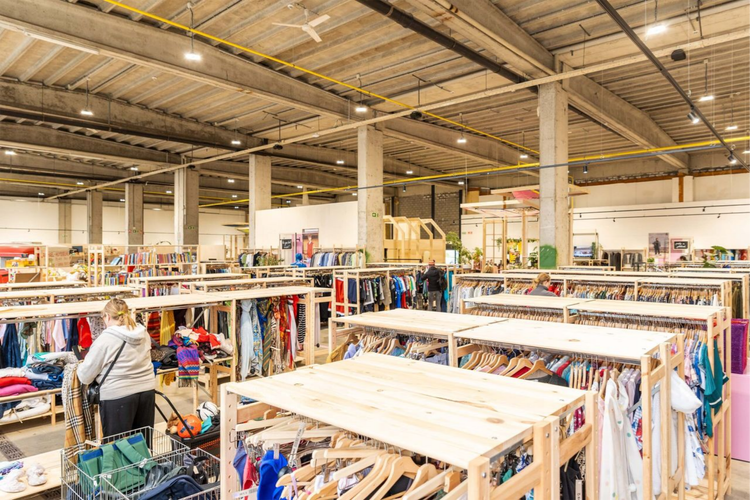
Still, scaling up was no easy task. "The clothing industry has existed for a very long time, but for our way of working with unique items and a price per kilo there was no concrete plan. Precisely because of all the variables, standardization is essential, because only then do you find out which combination results in a financially healthy store," Versluijs continues. "In practice it was mainly a matter of testing. We researched how many kilos need to be sold, how many square meters we need for that and which locations are best for it. Among other things, we found out that we benefit from more square meters so the range is wide enough for optimal revenue. Now there is a model that works."
Steering on data
An important part of that standardization is a data-driven way of working. Today, Kilo Kilo also knows exactly which product categories sell faster in Amsterdam than in Nijmegen and which items do better in Maastricht than in Utrecht. By using sales data, according to Versluijs, the retailer can steer much better on performance indicators such as revenue per square meter and visitor numbers in relation to revenue patterns.
The beating heart of this new way of working is a new software platform in which data flows from the POS, inventory management and the complete customer history come together and are integrated. All data is visible in real time, across all branches. The solution comes from Tilroy, which provides cloud-based software solutions to retailers in the non-food sector. Kilo Kilo then developed its own dashboard on top of this solution.
A POS with a scale
The starting point at Kilo Kilo was a POS with a scale, says Vincent Gaillard of Tilroy. "That is not common in non-food retail, but crucial for this concept. Thanks to the configurable action buttons in the POS, Kilo Kilo was able to set up the concept entirely by itself; nothing had to be developed. Our platform forms the basis for all store, product and customer data of the chain. The scale adds an extra layer on top, so Kilo Kilo can steer and report on its own concept, across all branches."
More control
In daily store practice, this means Kilo Kilo can always see how much clothing is sold in certain categories, where that happens and at what moment. The difference with before? "We run our business based on figures and data that were not easily visible before," says Versluijs. "At the bottom line we see exactly where the peaks and troughs are, so we can make operational decisions based on that. The clothing industry is seasonal. In the past, we followed the industry for the moment of putting stock on the floor. Based on our data, we now make those decisions ourselves and choose the moment when the result is optimal. With data you can back up certain considerations and also motivate each other to go for better performance."
Ready for further growth
Partly thanks to Tilroy, Kilo Kilo works in a fully digital way; there is not only real-time reporting per branch, but the stores are also completely cashless and there is an automated cash flow from POS to accounting. That brings efficiency and helps the company in its growth ambitions. Because according to Versluijs, this is far from the last we have heard of Kilo Kilo. "We now have a foothold, but we see many more expansion opportunities. In time we also want to go into Europe. Our last store was ready to sell after one phone call to Tilroy. It is great to work with a partner that thinks along with you and that you know has no ceiling."
This article was previously published on RetailTrends. Photos: © RetailTrends.nl